MECHANISM OF DISEASE:
Pathogenic TTR is at the source of clinical symptoms and ATTR progression1-8
Accumulation of pathogenic TTR deposits leads to ATTR progression.
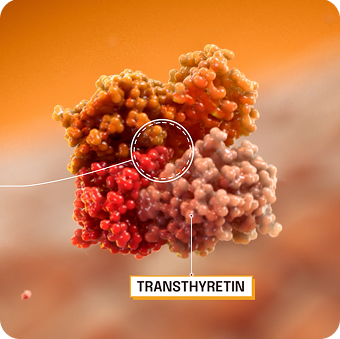
TTR SYNTHESIS1, 5-8
ATTR is caused by changes in TTR, a tetrameric protein primarily synthesized in the liver.

TETRAMER DISSOCIATION1, 5-8
TTR tetramers become less stable and dissociate into monomers and fragments.

MONOMER AGGREGATION1, 5-8
TTR monomers and fragments misfold and aggregate into pathogenic amyloid fibrils.
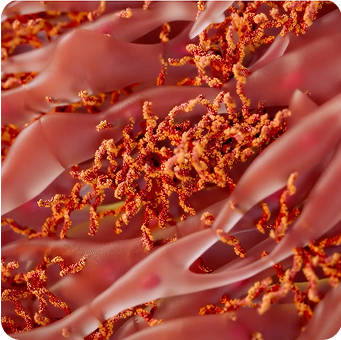
AMYLOID DEPOSITION1, 5-8
TTR amyloid deposits accumulate in the heart, nerves, gastrointestinal tract, and other tissues, causing damage that leads to clinical symptoms.
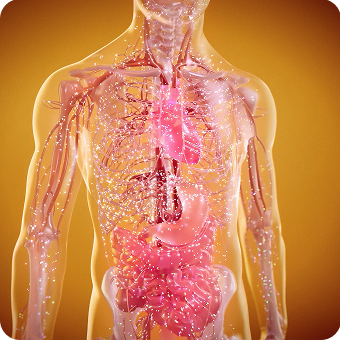
DISEASE PROGRESSION1, 5-8
Continued accumulation of amyloid deposits results in worsening clinical symptoms over time.


Learn more about the mechanism of disease behind ATTR
ATTR=transthyretin-mediated amyloidosis; TTR=transthyretin.
NEXT
Identifying ATTR


References:
- Shin SC et al. Mt Sinai J Med. 2012;79(6):733-748.
- Koike H et al. Biomedicines. 2019;7(1):11.
- Adams D et al. Neurology. 2015;85(8):675-682.
- Adams D et al. Curr Opin Neurol. 2016;29(suppl 1):S14-S26.
- Sekijima Y. J Neurol Neurosurg Psychiatry. 2015;86(9):1036-1043.
- Nativi-Nicolau JN et al. Heart Fail Rev. 2022;27(3):785-793.
- Kittleson MM et al. J Am Coll Cardiol. 2023;81(11):1076-1126.
- Hazenberg BPC. Rheum Dis Clin North Am. 2013;39(2):323-345.